Kalamazoo
Mechanics, podcasts, and ecosystems.

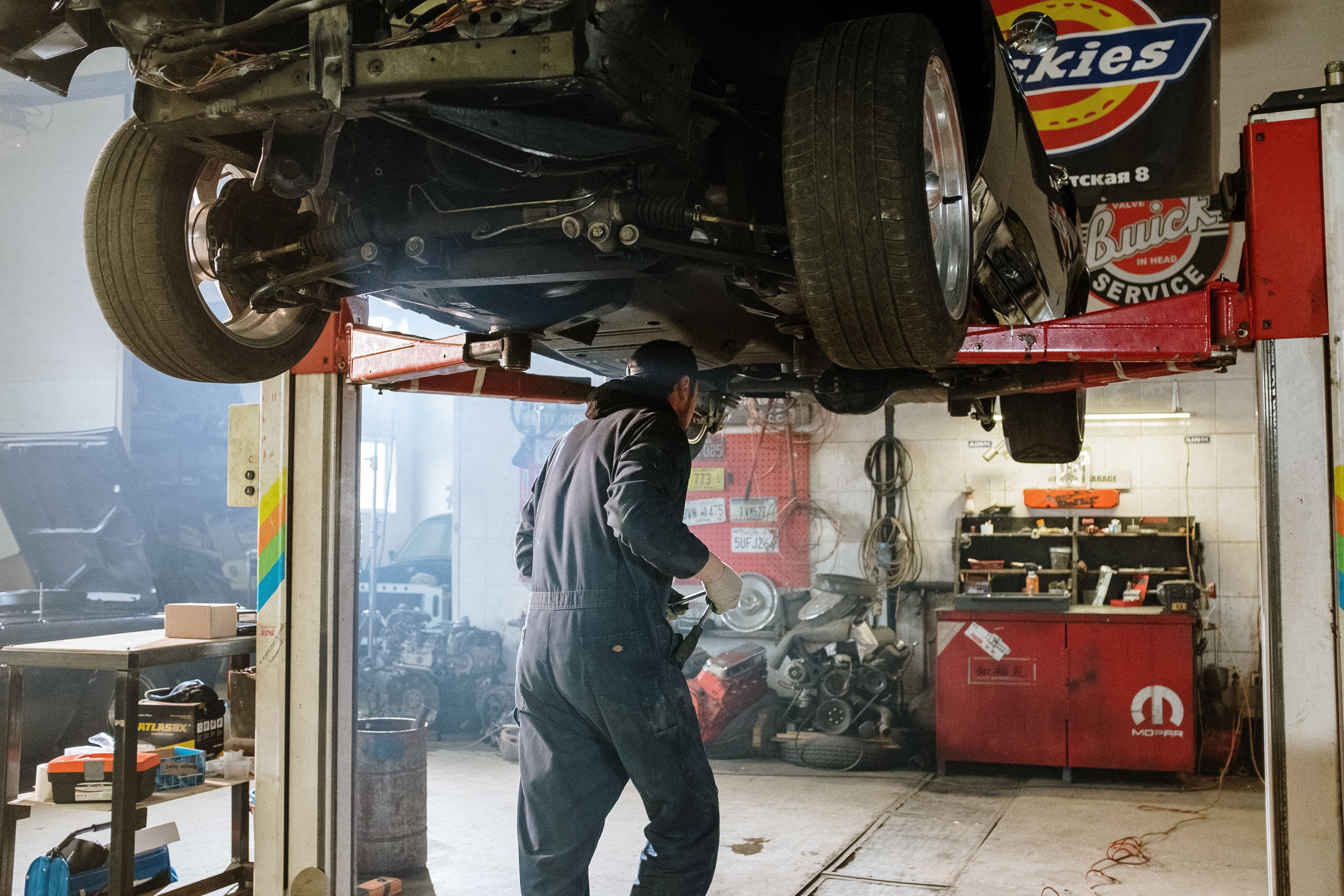
I was getting my oil changed in Kalamazoo, Michigan, this morning, chatting with everyone and their mother as I’m known to do, when one of the mechanics asked how long I had to drive to get back home. About eleven hours, I told him, and asked if he had any podcast recommendations, because over the last two weeks of this trip I reckon I have just about reached the end of the internet.
“Well, I don’t really listen to podcasts and that stuff, but I do listen to Charlie,” he said.
“Charlie?” I asked.
“The one who was killed.”
Ah, Charlie Kirk. Of course. “I like the way he talks,” he added.
“I can see his appeal,” I said. “But I’m not too fond of the way he did things.” I spoke carefully and kindly, being sure not to insult a man who didn’t deserve it in any way-- i mean, he had just fixed my truck, hadn’t he? I’ve never understood why people do that —get all mean and righteous toward strangers who seem perfectly nice.
“People say he was racist, but I don’t think so. I’m not racist, and I liked him. My sister is biracial, and I love her.”
I never for a moment thought this man was racist-- I hadn’t thought one way or another about it--and it felt sad to me that he felt defensive about it. Of course he loves his sister.
The conversation shifted, and we talked about North Carolina-- I’m sure I guided it there, because I love to talk about my home state. I told him about how beautiful all the waterfalls up in the mountains are, about how the ocean sometimes surges right over the Outer Banks. “I’ve never been, but I’ve been following that terrible story about the shooting and the trial. I think it’s really sad they made that all about race when obviously the kid was a threat.”
I had no idea what he was talking about. “What shooting?” I asked. He went on to describe a crime and a trial that I had no idea about, and I listen to the news every night.
“Right there where you live,” he said, as if he were almost worried for me. “They tried to make it about race, too, but it was self defense.”
That’s when it struck me: This guy and I were trying to have a genuine conversation but were getting our information from two entirely different ecosystems. I genuinely had no idea what crime he was talking about or how he up in Michigan knew about it and I didn’t. And I had been telling him about the reason I was in Kalamazoo-- to interview someone about Medicaid cuts-- and he had no idea about that. We both seemed to like each other but we were having trouble connecting because the information we had about the world was so dramatically different.
All this time we were talking, a younger mechanic had been digging through some parts magazines next to us quietly. When the man I was talking to steered the conversation back towards Charlie Kirk, the younger mechanic chimed in. “I think what the problem is is that most of these folks are just talking about all the wrong things.” And then he went back to the parts magazine.
“Tell me more,” I said, very interested.
“Like, they talk about things that make us fight when we actually need to be talking about gas prices.”
“Amen to that!” shouted someone with his head down under a Chevy’s hood that I couldn’t see. A woman in the waiting area sighed a “uh-huh, that’s right” in our direction.
“Like, when people start talking, I try to think about not just what they are saying, but why they are saying it,” the younger guy said. “I think its so we don’t ask why we are spending all this money on war and don’t ask about the gas prices.”
“Do YOU have any podcast recommendations for me?”
“Absolutely,” he said without missing a beat. “Gearbox.”
“Oooh, what’s it about?” I asked.
He looked at me as if I were dim. “Fixing cars.”
Anyway, that’s how I just listened to five episodes straight of a podcast about how to open and operate my own mechanic shop. I feel cleansed.
This morning I read the article in the NYT about Spacebase, TX, Elon Musk’s private city for employees of his HQ, and I immediately thought of how you visit so many towns across the nation, talking to regular, working people and helping us get a view from a different place. I was saddened thinking about how awful this world will be if we are all tied to one oligarch or another, trapped in our tiny, frictionless villages unable to reach out to the outside world — or to share our own lives with others. They mention Fordlandia, Henry Ford’s “utopia” in the Brazilian rain forest. He built his own ideal town according to his personal vision of what was best for humanity, and his rainforest employees were required to eat the foods he thought were best and to do square dancing at his rec centers, because he loved square dancing. And it seems so strange to contemplate a world where what a small group of uber-wealthy men create these tiny, separated worlds on which to test their beliefs on real humans who need shelter, safety, food, and the like. Anyhow, your piece was the first post on my FB feed this morning(before it crashed), and I was so glad to find your visit to a town I’ve never visited and to find your writer’s voice guiding us through the conversation and highlighting, once again, that while our places and views may differ, we all come back to our desire to live and work and talk to each other without domineering filters and media ecosystems. Thank you for your work.
Love this, Gwen ❤️